Learning
Top 5 Must-Have Crochet Tools for Beginners
Introduction: Starting a new craft is always exciting, but walking into a craft store or browsing online supplies can quickly feel overwhelming. With hundreds of gadget options, dynamic hook materials, and endless accessories available, what do you actually need to start your crochet journey? The good news is that crocheting is one of the most budget-friendly crafts in the world! You don't need a huge budget or fancy equipment to create gorgeous plushies, blankets, or wearables. In this guide, we break down the top 5 must-have tools every beginner needs in their starter kit to make crafting smooth, easy, and enjoyable from day one.
Why the Right Tools Matter
Having the right basic toolkit prevents common beginner frustrations like split yarn, hand cramps, and lost stitches. While you can always expand your collection later with specialized gadgets, focusing on high-quality basics will give you a seamless learning experience right from your very first loop.
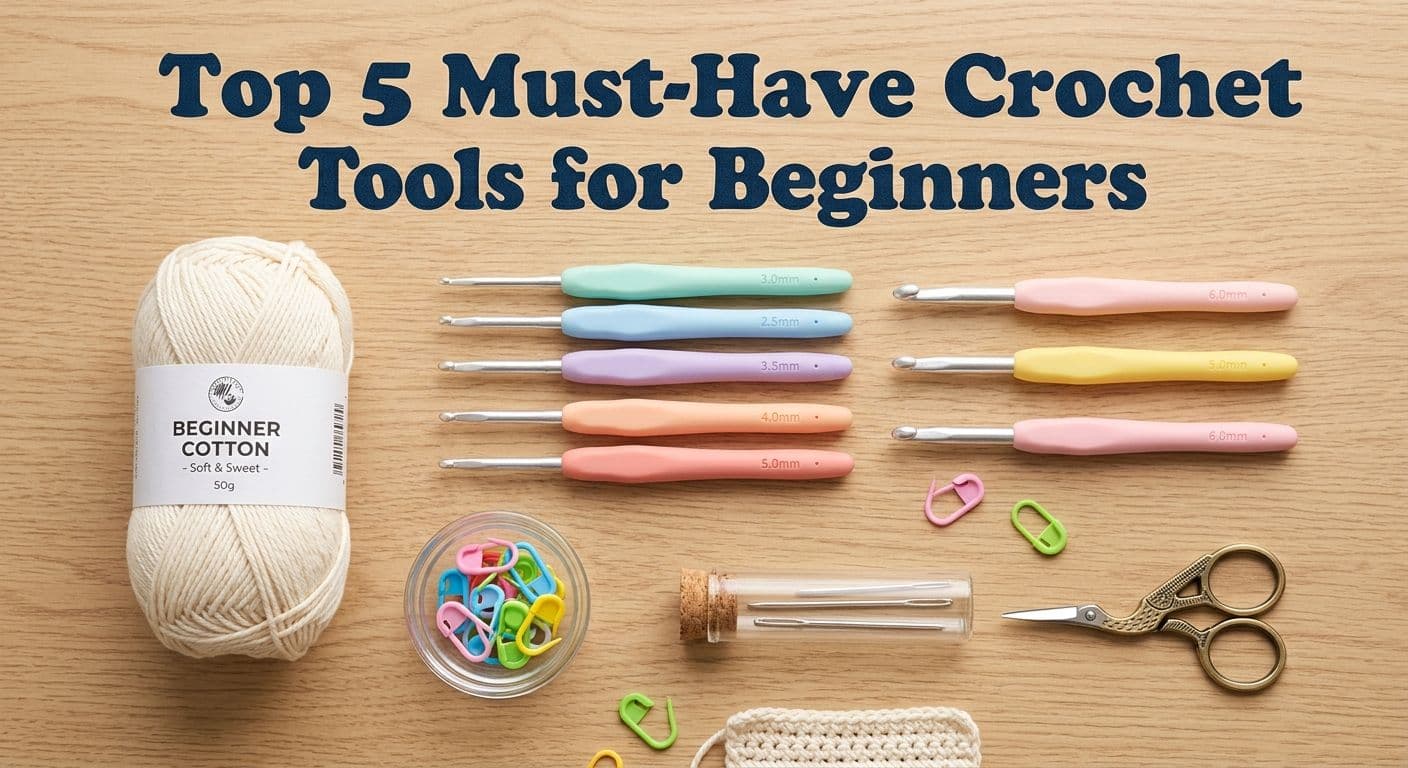
1. Ergonomic Crochet Hooks (The Essential Wand)
Your crochet hook is your primary instrument. While traditional aluminum or plastic hooks work fine, investing in an ergonomic crochet hook with a soft rubber handle is a game-changer for beginners.
- Why You Need It: Ergonomic grips reduce hand fatigue, prevent wrist pain, and provide a comfortable hold whether you use a "pencil grip" or "knife grip."
- Beginner Recommendation: Start with a 4.0 mm (G/6) or 5.0 mm (H/8) hook—these medium sizes fit most beginner-friendly yarn weights perfectly.
2. Smooth Medium-Weight Yarn (#4 Worsted Cotton or Acrylic)
You can't crochet without yarn! However, not all yarn is created equal for a beginner's hands.
- Why You Need It: Choosing a smooth, light-colored medium yarn makes it easy to clearly see each stitch loop and build muscle memory.
- Beginner Recommendation: Opt for a 100% Cotton or high-quality Acrylic yarn in light pastel shades (like cream, soft pink, or sage green). Avoid dark colors (like black or navy) and fuzzy/velvet yarns until you are comfortable identifying basic stitches.
3. Locking Stitch Markers (Your Safety Pins)
Losing your place in a pattern or accidentally dropping stitches at the end of a row is the most common beginner mistake.
- Why You Need It: Locking stitch markers snap securely onto a loop to mark the beginning of a round in amigurumi or the first/last stitch of a flat row. They ensure your edges stay perfectly straight without extra or missing stitches.
- Beginner Recommendation: Plastic safety-pin style locking markers are cheap, secure, and won't snag your yarn fibers.
4. Blunt Yarn Needles / Tapestry Needles
Once your project is fully crocheted, you need a way to finish it neatly!
- Why You Need It: A yarn needle (tapestry needle) has a large eye to fit thick yarn and a blunt tip that slides easily between stitches without splitting the threads. You will use it to weave in loose tail ends and sew pieces together on amigurumi plushies.
- Beginner Recommendation: Keep a set of steel or plastic blunt tapestry needles in different sizes in your kit.
5. Sharp Small Craft Scissors
Using household kitchen scissors or dull blades can chew up yarn ends, leaving frayed, messy edges.
- Why You Need It: A small, sharp pair of embroidery or yarn scissors creates crisp, clean cuts on your yarn tails, making them much easier to thread into your yarn needle.
- Beginner Recommendation: Compact crane scissors or small spring-action crafting snips are inexpensive and fit neatly into any small pouch.
Pro Tips for Assembling Your Starter Kit
- Buy a Set: Many ergonomic hook sets come in small zip pouches that already include stitch markers, yarn needles, and measuring tapes altogether!
- Keep It Portable: Store your tools in a small pouch so you never lose your stitch markers or needles between sessions.