Learning
How to Choose the Right Yarn for Your Crochet Project
Introduction: Walking into a craft store or browsing yarn online can be both thrilling and overwhelming. With hundreds of colors, textures, and fiber types available, how do you know which yarn will bring your crochet vision to life? Choosing the wrong yarn can make your project too stiff, too stretchy, or difficult to work with. In this guide, we will break down everything you need to know about yarn fibers, weights, and textures so you can confidently select the perfect yarn for every crochet pattern you tackle!
Why Choosing the Right Yarn Matters
Yarn is the main ingredient in every crochet project. The fiber content affects how your finished item feels, washes, and holds its shape, while the yarn weight determines the overall size and drape. Understanding these key factors will save you time, money, and frustration.
1. Understanding Fiber Types: Natural vs. Synthetic
The fiber material determines how your item will perform in daily use:
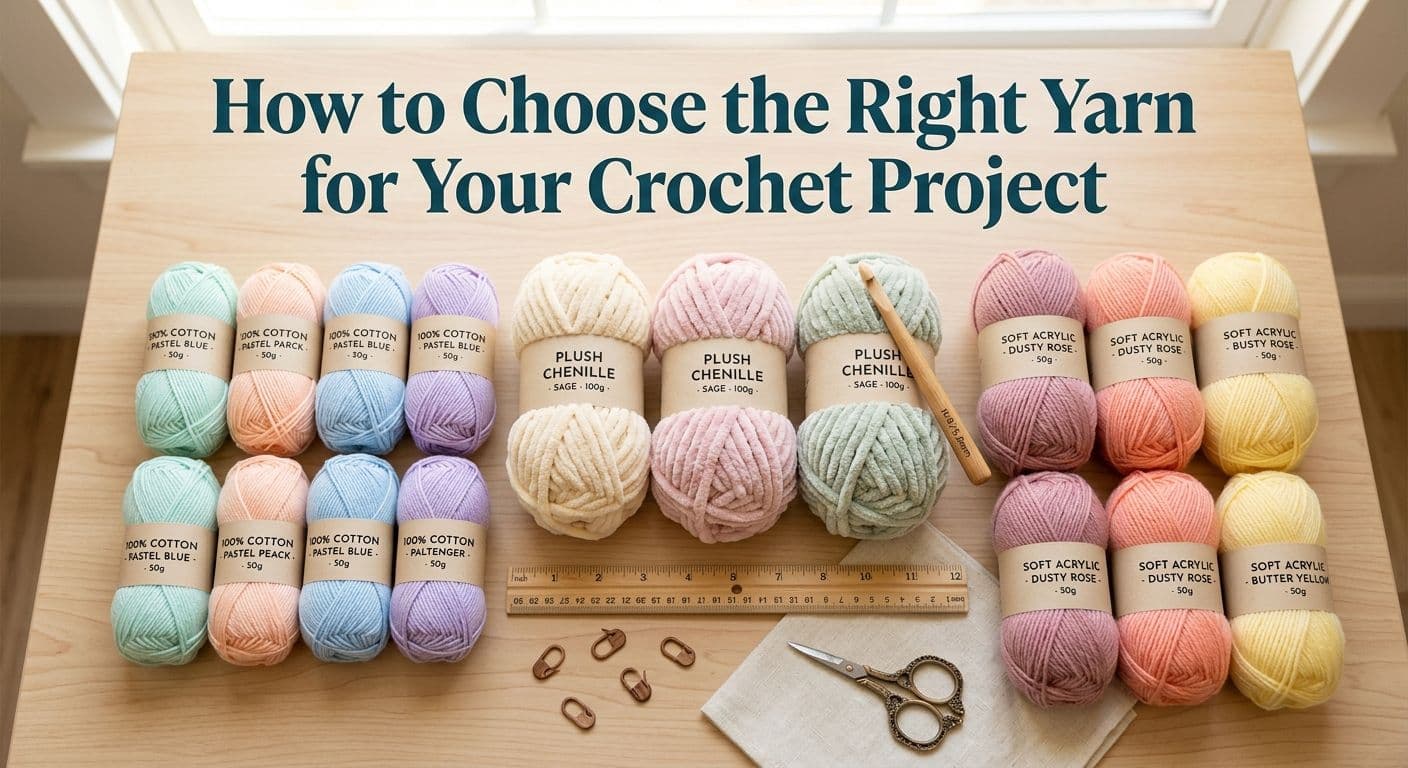
- Cotton Yarn: Highly durable, breathable, and clear stitch definition. Perfect for dishcloths, summer wear, and amigurumi toys because it holds its structure exceptionally well.
- Acrylic Yarn: Budget-friendly, widely available, and easy to wash. Great for beginners, blankets, and everyday garments, though it can split slightly while stitching.
- Wool & Animal Fibers: Warm, elastic, and soft. Ideal for cozy winter scarves, sweaters, and hats, but requires careful washing to prevent shrinking.
- Chenille / Velvet Yarn: Extremely soft and plush. A favorite for soft no-sew amigurumi plushies, though it requires gentle handling during tension adjustments.
2. Demystifying Yarn Weights (Thickness)
Yarn comes in standard weight numbers from #0 (Lace) to #7 (Jumbo). Here are the most common weights beginners will encounter:
- #2 Sport / Fine: Lightweight, great for delicate baby clothes and lightweight shawls.
- #3 DK (Light Worsted): Versatile for lightweight sweaters, baby blankets, and accessories.
- #4 Worsted / Medium: The absolute best weight for beginners! Easy to see your stitches and widely used in almost all general patterns.
- #5 Chunky / Bulky: Thicker yarn that works up very quickly into chunky plushies, warm beanies, and cozy blankets.
3. Matching Yarn to Your Project
- For Amigurumi & Toys: Choose #4 Worsted Cotton or #5 Chunky Chenille for tight stitches that keep fiberfill stuffing inside.
- For Wearables & Sweaters: Choose soft DK or Worsted Acrylic/Wool blends for a smooth drape.
- For Home Decor & Washcloths: Stick to 100% Cotton for heat resistance and durability.
Pro Tips for Buying Yarn
- Check the Skein Label: Always look at the recommended hook size and care instructions printed on the paper sleeve of your yarn.
- Buy Enough Dye Lots: If using multiple skeins of the same color, ensure they share the same Dye Lot Number so the shade stays identical across your whole project.
- Start Smooth: Avoid highly textured or fuzzy novelty yarns when practicing basic stitches—smooth yarns make stitch placement much easier to see.